
Flat Roof Repair and Installation in Los Angeles
Flat and low-slope roof repair and replacement in Los Angeles. TPO, modified bitumen, drains, seams and flashing.

Family owned Los Angeles, CA
Licensed · Bonded · Insured
California license #1045592
01 / Flat roofing
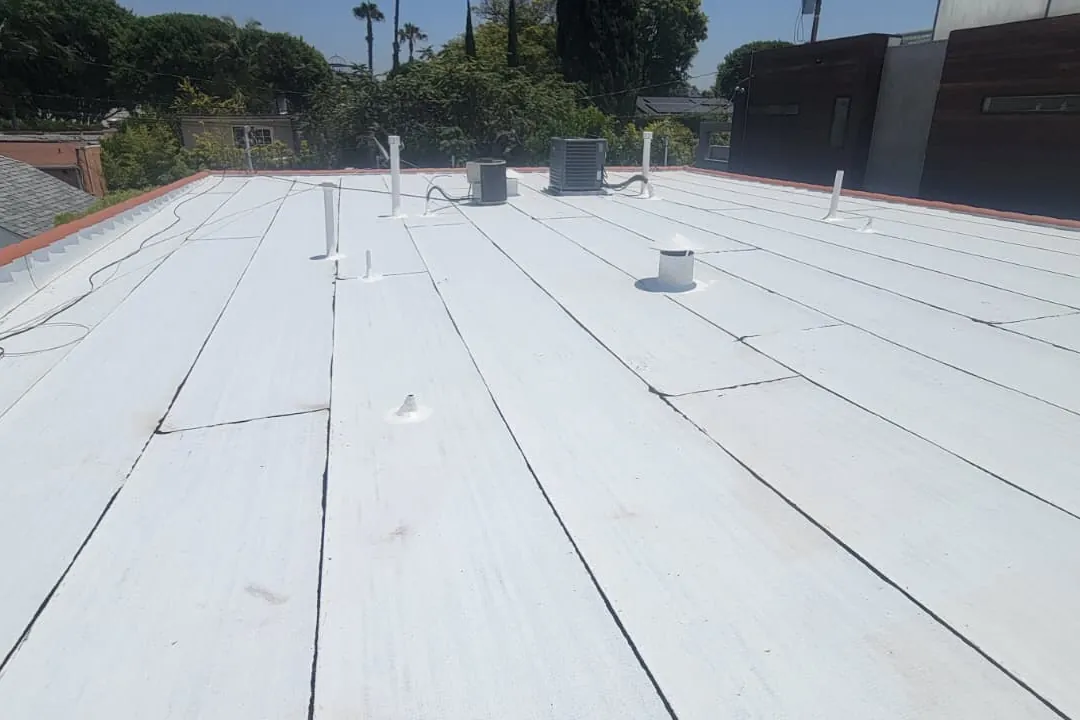
Flat and low-slope roofs are all over Los Angeles: mid-century houses, rear additions, garages, duplexes and small apartment buildings. They are also where leaks hide, because water that does not run off quickly finds every weak spot. Denali Builders CA repairs and replaces flat roofs, and looks for the reason the water is not leaving before it picks a fix.
02 / Where they show up
Where flat roofs show up
- Mid-century homes with low-pitched or flat roof sections
- Rear additions, porches and covered entries
- Detached garages and accessory units
- Duplexes and small apartment buildings
- Roofs with rooftop equipment such as air conditioners or solar panels
03 / Systems
Flat roof systems common in Los Angeles
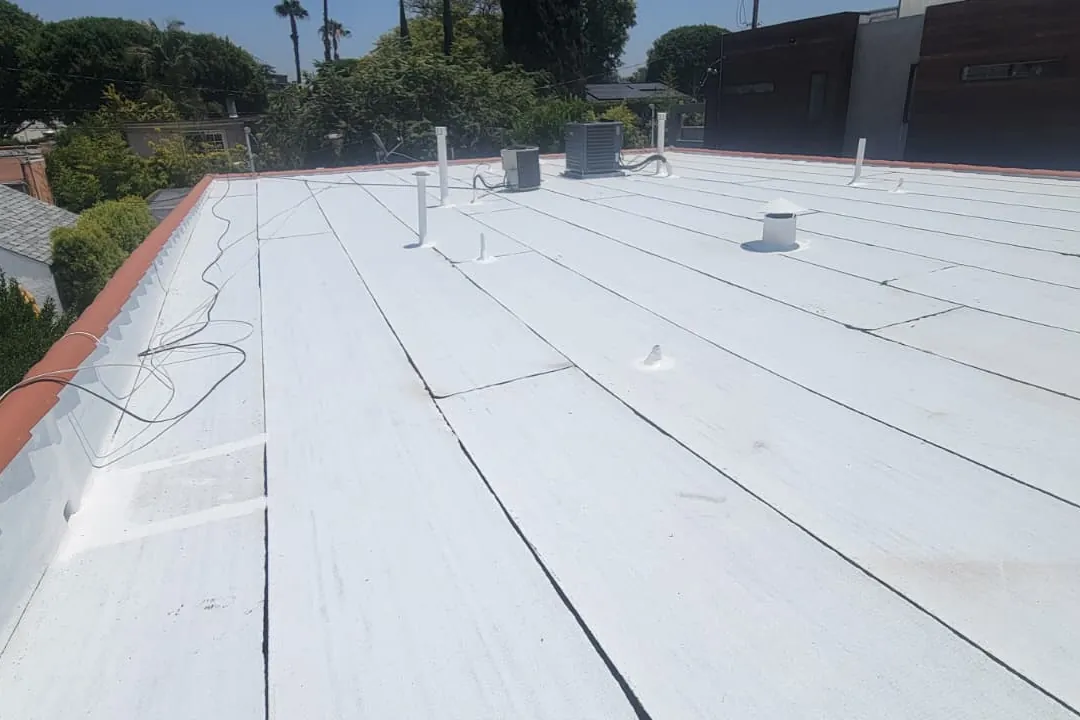
- TPO. A single-ply white membrane with heat-welded seams. Its reflective surface suits cool roof rules and keeps heat down.
- Modified bitumen. Layered asphalt-based sheets with a granulated cap sheet, a long-used system for low-slope roofs.
- Built-up roofing. Layers of asphalt and reinforcing fabric, often found on older buildings.
- Coatings. A reflective coating can extend a roof whose membrane is still sound.
Which one fits depends on the building, the deck and how much the existing roof has deteriorated. We look at the roof before recommending a system.
04 / Why they leak
Why flat roofs leak
- Ponding. Water standing for days breaks down the membrane and finds its way through seams.
- Clogged drains and scuppers. Leaves and debris stop the water from leaving.
- Seams and laps. Open or aged seams are the most common leak point.
- Flashing. Edges where the roof meets a wall or parapet, and around vents and equipment.
- Foot traffic. Technicians servicing air conditioners or solar panels wear the membrane.
I have a flat roof with leaking in a few area the last three years I fixed that four or five times with different roofers and it didn’t work
My front house has a pitched roof, while my garage unit has a flat roof. I am very satisfied with the work that was done for both, and the time that it took to complete.
05 / Repair or replace
Repair, coating or replacement
| Condition | Usual answer |
|---|---|
| Leak from a seam, flashing or penetration, membrane otherwise sound | Targeted repair |
| Membrane sound but weathered or faded | Cleaning and recoating, if it qualifies |
| Cracking, blistering or open seams across the roof | Replacement |
| Wet insulation or soft decking found underneath | Replace the damaged layers, then the membrane |
For a closer look at repair work, see roof repair. For a full job, see roof replacement.
06 / Drainage
Slope, drainage and details
A low-slope roof still needs enough slope for water to move, and the drains, scuppers and edge details need to work together. Where ponding keeps returning, the fix may involve tapered insulation or drain changes, not just a new membrane. We check this on the roof before we write the estimate.
07 / Permits and code
Cool roof and permit rules for low-slope roofs
In the City of Los Angeles the Department of Building and Safety (LADBS) issues roofing permits and inspects the work. Replacing a roof covering generally needs a permit. California's Energy Code (Title 24) also sets cool roof requirements for many replacements, with stricter minimums for low-slope roofs than for steep ones. The products are rated by the Cool Roof Rating Council. A white TPO membrane is a common way to meet them. We check which requirements apply to your building before we choose a system.
08 / How it works
How a flat roof job works
We inspect the roof, drains, flashing and, where we can, the attic or ceiling below.
We explain what is failing and whether a repair, a coating or a replacement fits.
You get a written estimate
We handle the permit when the work requires one.
The crew does the work, cleans up each day and checks that the roof drains.
Is a flat roof really flat?
No. A flat roof has a very small slope, sometimes called low-slope, so water can run to a drain or edge. When water stays on a flat roof for days after rain, the slope, the drains or the membrane need attention.
What is a flat roof made of?
Most flat and low-slope roofs in Los Angeles use a membrane such as TPO or modified bitumen. Older roofs may have built-up layers of asphalt and gravel. Which system suits your roof depends on the building and the deck.
Can a flat roof be repaired, or does it need replacing?
Repair works when the membrane is mostly sound and the leak comes from a seam, flashing or penetration. When the membrane is cracked and worn across the roof, or the insulation below is wet, replacement is the more reliable answer.
Do flat roofs have to be cool roofs?
California's Energy Code sets cool roof requirements for many roof replacements, and the minimums are stricter for low-slope roofs than for steep ones. We check what applies to your building before choosing the membrane.
Do you work on garages, additions and ADUs?
Yes. Flat and low-slope roofs are common on garages, rear additions, porches and accessory units, and we repair and replace them.
10 / Keep exploring
More roofing help
- Roofing servicesEverything we do on a roof
- Roof repairLeaks, storm damage, flashing
- Roof replacementTear-off to final inspection
- Tile roofingClay and concrete tile
- Asphalt shingle roofingRepair and re-roofing
- Roof inspectionKnow what your roof needs
- Roofing questionsStraight answers for homeowners
- Areas we serveCities and permit offices
- Customer reviewsWhat customers say on Google
- Contact usCall or send a message
Los Angeles & surrounding communities
Santa Monica · Culver City · Burbank · PasadenaSanta Monica, Culver City, Burbank and Pasadena
See service areasFree consultation
Get your flat roof looked at
Tell us where it leaks or where water stays, and we will find out why.
(855) 200-6550Prefer a conversation? Give us a call.